Watering Basil: How Often and How Much in Pots and Borders
Basil is often described as thirsty, and there is some truth in it. Yet most basil plants lost each summer are drowned rather than parched. The difference between a supermarket pot on a sunny windowsill and a sturdy plant in a raised bed comes down to how quickly the compost dries around the roots. Judge that correctly and you will be picking leaves for months. Get it wrong and a healthy-looking plant can collapse in three days. The good news is that basil tells you what it needs, if you know where to look.
A fixed watering schedule fails because it ignores everything that actually matters: pot size, temperature, wind, and how much leaf the plant is carrying. Instead, test the compost each time before you reach for the can.
In hot weather, small pots may need checking daily. Larger pots in a cool spell can go four or five days without a second glance.
Frequency depends far more on pot volume than on the plant itself, because a small pot holds very little reserve.
A 9 cm pot or a seedling tray can dry out in a single warm day, and sometimes twice on a still, hot afternoon. Check morning and early evening in midsummer. These plants have little margin for error, so keep them out of the fiercest midday sun if you can.
This is the size most kitchen basil ends up in. Expect to water every two to three days in summer, stretching to a week or more in cool, cloudy weather. Water thoroughly until it runs from the drainage holes, then leave it alone until the top layer dries again.
Bigger pots hold more compost and support deeper roots, so they need watering less often — typically every three to five days in summer. A generous soak every few days suits them better than a daily splash, which only wets the top layer and encourages shallow rooting.
The material matters too. Terracotta breathes and dries faster than glazed ceramic or plastic. Dark pots in full sun warm up quickly and lose moisture sooner. And a saucer left full of standing water is an invitation to root rot, so empty it an hour after watering.
Wind dries compost faster than heat does. A basil pot on a breezy balcony can lose moisture more quickly than one in a sheltered, hotter corner. Full sun plus a light breeze is the combination that catches people out.
Indoor basil in winter is a different plant entirely. Growth slows, light levels drop, and a warm room with dry air pulls moisture from the leaves. Watering needs fall sharply — often to once a week or less. Many windowsill basil plants die in January from well-meant daily watering rather than from the cold.
Rain complicates outdoor pots. After a heavy shower, check whether the compost is saturated, tip out any saucer, and skip the next watering. Basil dislikes sitting wet far more than it dislikes a dry afternoon.
In open ground, roots can travel further down and sideways, so you water less often but far more thoroughly. Aim for a good soak every few days rather than a daily sprinkle, which encourages roots to stay near the surface where they suffer first in a dry spell.
Water in the morning, at the base of the plant, and let it sink in slowly. Wet foliage overnight encourages fungal problems such as downy mildew, so keep the leaves dry where you can. A mulch of garden compost or grass clippings around the plants slows evaporation and keeps the soil more even.
Soil type changes the rhythm. Sandy ground drains quickly and may need watering every second day in a hot spell, while clay holds moisture and can go much longer. Raised beds dry out faster than open ground because they are exposed on more sides. Check 5 cm down with a trowel before deciding.
Overwatering looks oddly like drought: wilting, limp stems, yellowing lower leaves, and sometimes blackening where the stem meets the compost. Lift the plant out and smell the root ball. Healthy roots are white and firm; rotting ones are brown, mushy and sour-smelling. Fungus gnats hovering around the pot are another clue.
To rescue a waterlogged plant:
Dry compost pulls away from the sides of the pot, leaves feel thin and crisp at the edges, and the whole plant droops by early afternoon. If the root ball has dried out completely, a normal watering may run straight down the gap and out of the bottom. Stand the pot in a bowl of water for twenty minutes so the compost can reabsorb moisture, then let it drain fully.
Water in the morning where you can, at the base of the plant, until it runs through. Then wait, and check before you water again rather than watering out of habit. If you are unsure, give it another day — basil copes with a short dry spell far better than with constantly wet roots.
Keep plants pinched back and pick leaves regularly to encourage bushy growth, and feed lightly once a week during the growing season if the compost is more than a few weeks old. Get the watering right and the rest of basil care becomes much easier.
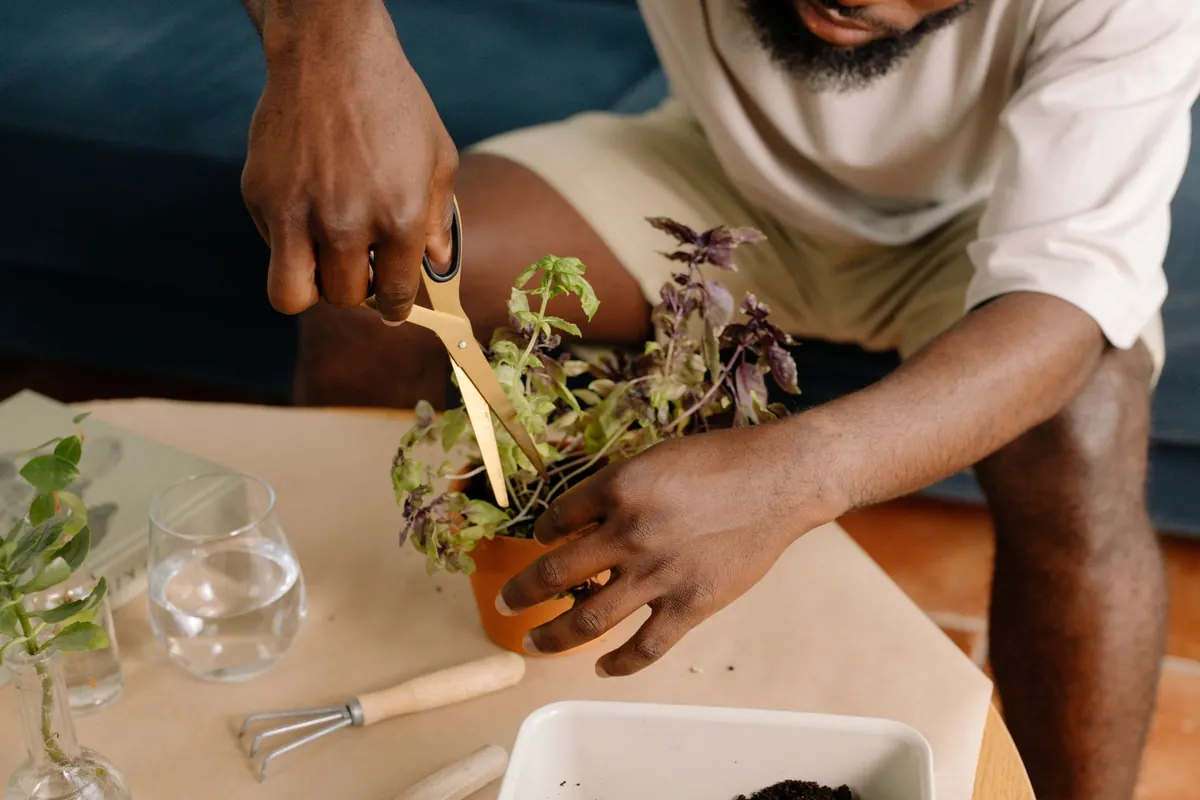
Photo: cottonbro studio / Pexels
Previous Post
Why Is My Basil Turning Yellow? 7 Common Causes and Fixes
Next Post
Basil Downy Mildew in the UK: Symptoms, Prevention and Resistant Varieties